
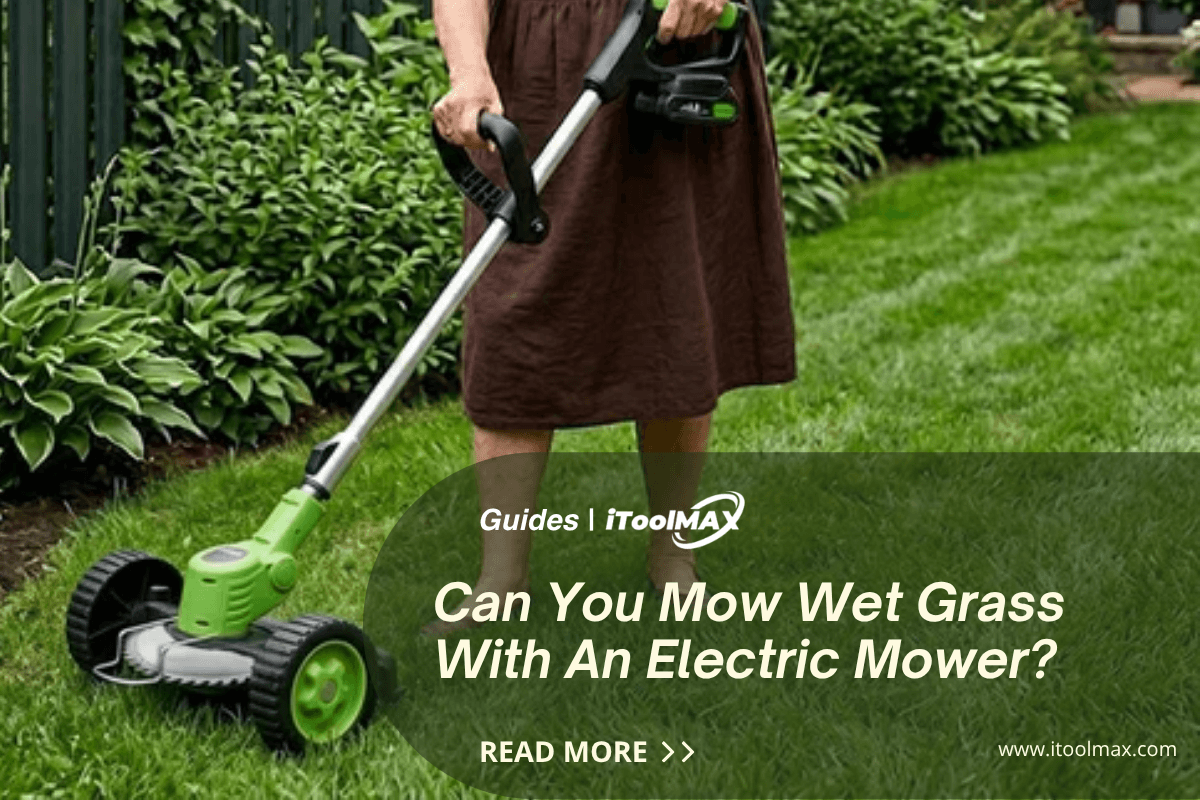
Many homeowners have asked iToolMax: Can I mow wet grass with an electric lawn mower?
While it is theoretically possible—and there are no safety concerns with iToolMax battery-powered mowers—there are still risks involved. We will discuss the best time to mow and the risks associated with mowing in damp conditions.
The Risks of Mowing a Wet Lawn

#1 About Personal Safety
- Risk of Electric Shock
If your lawn mower is corded, water and electricity can be dangerous. However, all iToolMax lawn mowers are cordless and battery-powered, so the risk of electric shock is extremely low. Even so, we recommend avoiding use in standing water or during heavy rain to ensure safety. - Risk of Slipping
Flat, dry lawns are relatively safe, but wet or sloped lawns are extremely slippery. Thousands of people are injured every year while gardening—don’t become one of them! Whether it’s raining or not, always wear appropriate boots and pants when using a lawn mower to ensure stability and safety.
#2 About Equipment Protection
- Lawn Mower Damage
Battery-powered lawn mowers should not come into direct contact with water. Water ingress may damage the motor or cause the blades to rust. Light mowing in dew or light rain is generally fine, but prolonged exposure to damp conditions increases the risk of damage to the battery and equipment, which may compromise safety. - Impact on Battery Performance
Damp conditions may cause the battery to discharge more quickly, resulting in shorter runtime. In cold temperatures or persistently damp conditions, the battery may have difficulty starting or may run out of power mid-use. It is recommended to ensure the battery is fully charged before mowing and to avoid operating in environments with excessively high humidity whenever possible. - Blade and Chassis Maintenance
Blades and the chassis are prone to rust or dulling in wet grass environments. Clean the chassis and blades promptly after mowing, and apply rust inhibitor as needed to extend the equipment’s lifespan.
#3 About Lawn Care
- Lawn Damage
If the lawn is uneven or the mower blade height is set too low, wet conditions can easily cause localized bald spots. We recommend first checking the ground level and raising the blade height appropriately. For best results, choose a lawn mower that features adjustable cutting height and a built-in mulching function, such as the 8.7-inch Electric Lawn Mower. - Healthy Lawn Growth
Mowing wet grass can cause clumps to form, which, when left on the lawn, can deprive the roots beneath of oxygen and lead to disease. Mowing on wet grass for extended periods can cause the lawn surface to become uneven or muddy. - Clippings Buildup
Wet grass is harder to cut, and its added weight makes it more difficult to mow evenly. Clippings can easily stick to the underside of the mower deck, potentially causing clogs even in high-powered mowers. Cleaning the mower deck and blades promptly after mowing can extend the equipment’s lifespan and maintain mowing efficiency.
| Is it safe to use an electric lawn mower in the rain? The CPSC Alerts Consumers to Lawn and Garden Care Dangers about the dangers of lawn and garden maintenance, noting that “Never work with electric power tools in wet or damp conditions. ” |
What Is The Best Way To Cut Wet Grass?
- Wear Appropriate Safety Gear
Be sure to wear non-slip shoes, gloves, and safety goggles. Safety should be your top priority when operating a power mower on wet ground. - Inspect and Maintain Your Mower
Make sure the blades are sharp, the battery is fully charged, and the undercarriage is clean. Sharp blades cut more efficiently and reduce the likelihood of clogs. - Work in Sections
Mow the lawn slowly, dividing it into small sections. Avoid forcing the mower through areas that are too wet or overgrown. If possible, it is best to wait until the lawn is mostly dry before mowing.
Best Conditions for Mowing the Lawn
- Dry Grass
Wet grass tends to clump together and stick to the blades, resulting in an uneven cut and potentially damaging the mower. The best time to mow is when the grass is dry, such as late morning or after noon, avoiding early morning when dew is heavy or after rain when the grass is wet. - Mild Weather
Avoid mowing in direct high heat or strong winds. Mild weather not only ensures operator safety but also promotes lawn health by reducing mowing stress. - Level Ground
Before mowing, check that the ground is level and remove debris such as rocks and branches to prevent blade damage or lawn injury. - Sharp Blades
Sharp blades cut grass blades quickly and cleanly, minimizing tearing and reducing the risk of lawn diseases.
Best Lawn Mower for Wet Grass: iToolMax 3 In 1 Cordless Grass Trimmer, Weed Eater and Edger

| Model | 3-IN-1 |
| Deck width | 6-9 inches |
| Battery | 2 x 21V 2000mAh |
| Charge time | 30-45mins |
| Blade system | saw blade x2 + stainless steel blade x2 + nylow blade x10 |
| Power | 1880W |
| Weight | 3.26 lbs Lightweight |
Why It Handles Wet Grass So Well?
The iToolMax 3 In 1 Cordless Grass Trimmer is currently the best-performing cordless lawn mower on the market for handling wet grass. Three key design features work in tandem: 90-degree high torque prevents the machine from stalling, an upgraded 1880W motor boosts mowing efficiency, and the wheeled design allows for easy maneuverability even in rainy weather.
Grace Mulligan noted that this model “didn’t stall even once while handling an eight-inch-tall, wet lawn covered in leaves.” If your lawn is frequently exposed to rain and you need reliable performance without the need for gasoline, this is the perfect choice for you.
Conclusion
While it is theoretically possible to mow a slightly damp lawn with an electric mower, waiting for dry weather is the safest and most effective option. Doing so reduces the risk of injury, protects your mower, and ensures a clean, even cut. Following these safety tips and maintenance procedures will keep both you and your lawn in top condition. If you have any questions, please feel free to contact the iToolMax product team.
- Most users read: what are the best weed trimmers for a small yard?
Share:
3 Best Cordless Weed Eater for Small & Medium Garden
How Do You Start an Electric Lawn Mower? (Beginner's Guide)