
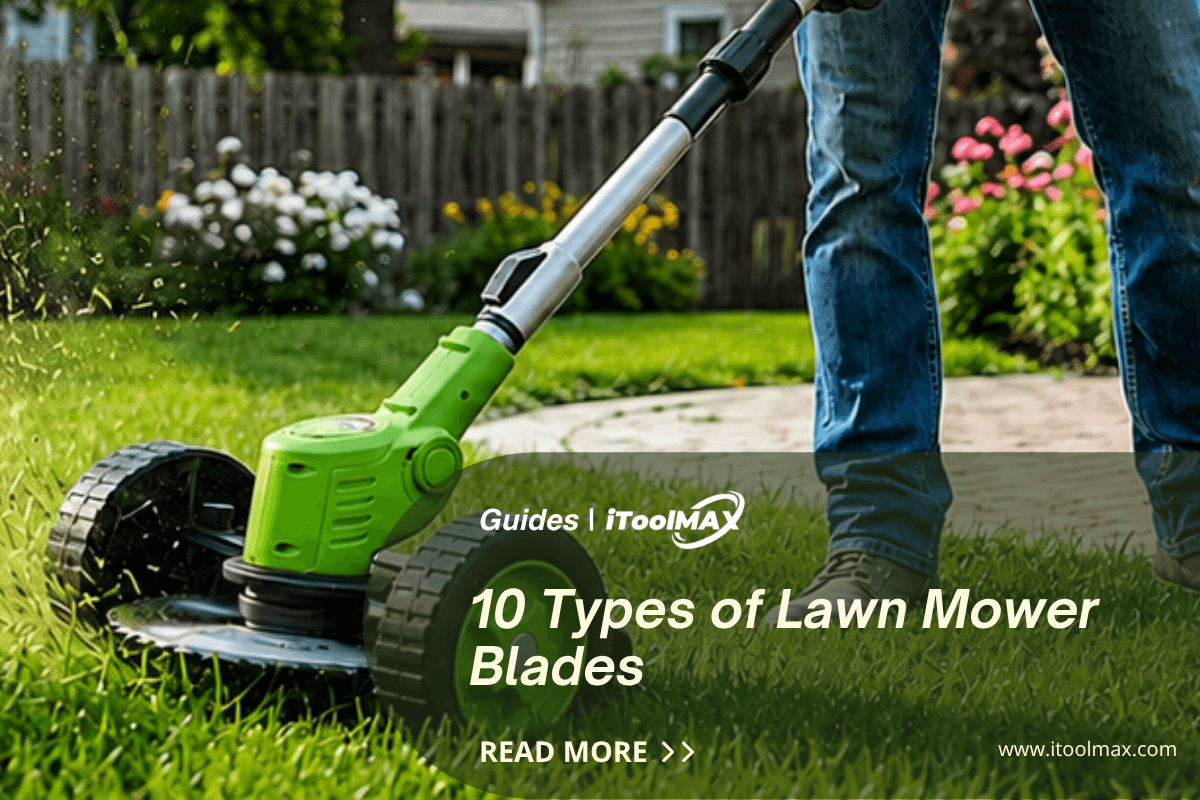
De vorm van een mes beïnvloedt veel meer dan alleen hoe scherp het gras wordt gesneden. Het kan de luchtstroom onder het maaidek beïnvloeden, hoe goed het gras rechtop staat voordat het wordt gesneden, hoe efficiënt grasresten in een zak terechtkomen en of die grasresten worden afgevoerd of in fijnere stukjes worden gehakt.
Ik ben Carter Cathy en schrijf producteducatie-inhoud voor iToolMax, waar ik onderzoek doe naar gazon- en buitengereedschap, snijsystemen vergelijk en technische specificaties omzet in praktische informatie die huiseigenaren echt kunnen gebruiken. Een van de meest voorkomende fouten die ik zie bij het kopen van vervangende messen is de aanname dat elk mes van ongeveer dezelfde lengte zal werken.
Het juiste mes moet zowel bij de klus als bij de machine passen.
In deze gids bespreken we 10 soorten draadloze grasmaaiermessen en gerelateerde snijaccessoires, leggen we uit waar elk het beste werkt en vergelijken we hun voor- en nadelen. Je leert ook hoe je kunt kiezen tussen mulchen, liften, opvangzakken en zware snijsystemen.
Wat is een grasmaaiermes?

Een grasmaaiermes is een roterend snijonderdeel dat onder een maaidek is gemonteerd. De geslepen snijkant snijdt gras terwijl het mes met hoge snelheid draait.
Maar snijden is slechts een deel van het werk.
De vorm van het mes kan ook luchtstroom binnen het maaidek creëren. Afhankelijk van het ontwerp kan die luchtstroom:
- Til gras op voordat het wordt gesneden
- Beweeg grasresten naar een afvoerkanaal
- Duw grasresten in een opvangzak
- Houd grasresten in circulatie voor herhaaldelijk snijden
- Verminder stof- en vuilverspreiding
Dit is waarom verschillende soorten grasmaaierbladen kan merkbaar verschillende resultaten opleveren op hetzelfde gazon.
Een high-lift mes is bijvoorbeeld ontworpen om een sterkere luchtstroom te creëren dan een low-lift mes. Een mulchmes is zo gevormd dat het grasresten langer binnen het dek houdt zodat ze in kleinere stukjes kunnen worden gesneden.
Het mes moet altijd compatibel zijn met het maaidek, het montagesysteem, de draairichting en de vermogensspecificaties van de maaier. De iToolMax 3-in-1 Draadloze Grastrimmer wordt geleverd met drie mesopties. Het is een alles-in-één draadloze duwgrasmaaier, trimmer en kantensnijder.
Waarom zijn er verschillende soorten grasmaaiermessen?
Er is geen enkel mes dat het beste is voor elk gazon.
Een huiseigenaar die een droge, zanderige tuin maait, heeft andere behoeften dan iemand die dik lentegroen maait en elk grassprietje opvangt in een achterzak.
De belangrijkste verschillen tussen typen grasmaaiermessen komen neer op vier factoren:
- Grascondities — kort, hoog, dik, nat, droog of grof
- Grasafvalbeheer — opvang, mulchen of afvoeren
- Ontwerp van de maaier — elektrisch, benzine, zitmaaier of gespecialiseerd snijgereedschap
- Luchtstroomvereisten — lage, matige of hoge lift
10 Veelvoorkomende soorten grasmaaiermessen
1. Standaard grasmaaiermessen (Medium-Lift grasmaaiermessen)

Het meest voorkomende type op de markt is het standaard mid-lift mes, dat nu het standaardfabrieksmes is op vrijwel alle benzine- en elektrische grasmaaiers die in winkels worden verkocht.
Het is gemakkelijk te herkennen: het hoofdgedeelte van het mes is recht, met de randen aan beide uiteinden omhoog gebogen. Dit gebogen ontwerp leidt de luchtstroom omhoog, waardoor de grassprieten worden opgetild om het snijden te vergemakkelijken.
Zodra de luchtstroom de grassprieten optilt, maakt het mes de snede af, wat resulteert in een gelijkmatige trim. Geschikt voor de overgrote meerderheid van tuinsituaties, het is een veelzijdig, allround model, hoewel het geen opvallende specialiteiten heeft. Daarom is het het standaardfabrieksmes geworden voor de overgrote meerderheid van grasmaaiers.
Het beste voor:
- Reguliere residentiële gazons
- Vaak onderhouden gras
- Algemeen maaien
- Huiseigenaren die een eenvoudig vervangend mes willen
Voordelen:
- Veelzijdig voor normaal maaien
- Breed verkrijgbaar
- Meestal gemakkelijk te onderhouden
- Goede balans tussen snij- en afvoercapaciteit
Nadelen:
- Mulchen mogelijk niet zo fijn als een speciaal mulchingmes
- Bieden mogelijk niet de luchtstroom van een high-lift opvangmes
- Prestaties kunnen afnemen bij zeer hoog of zwaar gras
2. High-Lift messen en Low-Lift messen

High-lift, low-lift en medium-lift messen behoren tot dezelfde serie, maar worden over het algemeen niet standaard meegeleverd bij de machine. Het gebogen ontwerp aan beide uiteinden van het mes bepaalt de liftcapaciteit van de luchtstroom: high-lift messen hebben een steilere kromming en genereren een sterkere luchtstroom, terwijl low-lift messen een zachtere kromming hebben en een zwakkere luchtstroom produceren.
Beide zijn geschikt voor specifieke situaties waarin medium-lift messen niet voldoende zijn:
-
High-lift messen zijn ideaal voor tuinen met hoog onkruid; hun krachtige luchtstroom zorgt ervoor dat alle grassprieten gelijkmatig worden afgesneden. Ze werken uitzonderlijk goed met een grasopvangzak, omdat ze een sterkere zuigkracht bieden die het gemakkelijker maakt om het gras in de zak te krijgen. Nadeel: Ze blazen veel stof en grind op tijdens het maaien, dus ze zijn niet geschikt voor gazons met zanderige grond.
-
Laagliftmessen, in tegenstelling tot hoogliftmessen, zijn geschikt voor kort gras en droge, zanderige tuinen. Ze produceren minimale luchtstroom en roeren geen grote hoeveelheden modder, zand of grind op. De messen zijn platter, wat resulteert in een lagere rotatieweerstand, waardoor ze gemakkelijker te gebruiken zijn op oudere grasmaaiers. Nadeel: Ze presteren slecht bij het verzamelen van grasresten en mulchen.
3. 3-in-1 Grasversnipperaarmes

Mulchmessen en hoogcapaciteitsmessen hebben volledig verschillende ontwerpen; de eerstgenoemden zijn specifiek ontworpen om grasresten en gevallen bladeren te versnipperen, zodat het versnipperde materiaal op het gazon blijft liggen om natuurlijk te ontbinden en als meststof te dienen.
Hoe het werkt: Eerst wordt het gras gemaaid; daarna worden de grasresten herhaaldelijk versnipperd; tenslotte valt het versnipperde materiaal terug op de grond.
Omdat ze drie modi ondersteunen—mulchen, verzamelen en zij-uitworp—staan ze ook bekend als “drie-in-één” messen.
Mulchmessen zijn er in verschillende ontwerpen: sommige hebben twee scherpe snijzones aan weerszijden, terwijl andere een getande rand hebben—de zogenaamde “alligator-tand” messen die eerder werden genoemd. Deze messen genereren een sterke luchtstroomlift, waardoor grasresten in de behuizing blijven zweven voor herhaaldelijk snijden; hun prestaties worden vaak vergeleken met die van hoogcapaciteitsmessen. Het belangrijkste verschil is dat hoogliftmessen uitstekend zijn in het verzamelen van gras, maar minder effectief in mulchen, terwijl mulchmessen precies het tegenovergestelde doen.
Seizoensaanbevelingen voor messen:
- Herfst: Ze zijn ook ideaal voor het versnipperen van gevallen bladeren. Wanneer droge bladeren worden gesneden door scherpe mulchmessen, veranderen ze in fijne humus die je gazon voedt.
- Zomer: Schakel terug naar standaard medium-lift messen om het gazon kort te maaien, zodat je huisdieren en familie allemaal van de achtertuin kunnen genieten.
4. Plat mes (Zero-Lift mes / Zandspecifiek mes)

Platte messen, ook wel zero-lift messen of zandmessen genoemd, zijn volledig vlak zonder opwaartse kromming, wat resulteert in vrijwel geen luchtstroomlift. Fabrikanten ontwerpen ze bewust op deze manier om te voldoen aan specifieke omstandigheden waarbij het optillen van grasbladen niet nodig is.
Hoofdzakelijk gebruik: zanderige tuinen.
Zand en grind zijn zeer schurend en kunnen, wanneer ze opwaaien, de behuizing van de grasmaaier afslijten—een probleem dat vooral voorkomt in zanderige tuinen in het zuiden van de Verenigde Staten. Platte messen minimaliseren de hoeveelheid stof en zand die in de machine wordt gezogen, waardoor slijtage van de apparatuur wordt verminderd.
Tenzij u te maken heeft met specifieke omstandigheden zoals zanderige grond of taai onkruid, is het absoluut niet nodig om platte messen aan te schaffen. Zelfs als het gras in uw tuin grof en taai is, kunnen laag- of middelhoog opheffende messen het gemakkelijk aan. Dit type mes is een niche, gespecialiseerd accessoire en wordt zelden gebruikt in alledaagse situaties.
5. Speciale messen

De laatste categorie bestaat uit speciale messen, die unieke ontwerpen hebben—ofwel baanbrekende technologie in grasmaaimesjes of innovatieve verbeteringen aan traditionele messtructuren.
Deze messen zijn niet compatibel met oudere, standaard grasmaaiers; ze kunnen alleen worden gebruikt als vervangingsonderdelen voor de originele apparatuurfabrikant (OEM) modellen, omdat hun mesopeningen eigendom zijn. Als uw grasmaaier standaard met dit systeem is uitgerust, raden wij aan bij vervanging dezelfde speciale messen te kiezen in plaats van standaardmessen.
#1 Cirkelzaagblad
Een cirkelzaagblad heeft meerdere scherpe tanden rondom de rand, waardoor het door taaiere en houtachtige begroeiing kan snijden die standaard grasmessen niet aankunnen.
Het beste voor: Dikke struiken, wijnstokken, dichte struiken en kleine boompjes.
#2 Metalen draaischijf
Een metalen draaischijf gebruikt sterke stalen draden om hardnekkig onkruid, mos en ongewenste groei weg te schrobben in plaats van ze te snijden zoals een traditioneel mes.
Het beste voor: Onkruid en mos verwijderen uit scheuren in opritten, bestrating, trottoirs en andere harde oppervlakken.
#3 Metalen draaischijf & fijn draaischijfje
Deze combinatie biedt twee niveaus van reinigingskracht. Het zware metalen draaischijfje pakt hardnekkig onkruid en aanslag aan, terwijl het fijne draaischijfje beter geschikt is voor lichtere, meer gedetailleerde reiniging.
Het beste voor: Terrassen, voegen in bestrating, opritranden, stenen oppervlakken en gebieden die zowel zware als precieze reiniging nodig hebben.
#4 Dubbel mes
Het dubbele mesontwerp gebruikt twee snijmessen voor snel en efficiënt maaien met een eenvoudige en lichte constructie.
Het beste voor: Regulier gras, gazonranden, zachte onkruiden en dagelijks tuinonderhoud.
#5 X-vormig mes
Het X-vormige mes heeft vier snijranden voor een bredere en agressievere snede. Het multidirectionele ontwerp maakt het effectief op dikkere en verwarde begroeiing.
Het beste voor: Dichte onkruiden, hoog gras, overwoekerde gebieden en taaiere begroeiing.
#6 Laser-Edge zelfslijpend mes (Niet los verkocht)
Dit exclusieve mes heeft een speciaal ontworpen laserbehandelde snijrand die helpt om effectieve snijprestaties te behouden tijdens regelmatig gebruik, waardoor minder vaak handmatig slijpen nodig is.
Het beste voor: Regelmatig grasmaaien, frequent tuinonderhoud en gebruikers die consistente snijprestaties willen met minder mesonderhoud.
Mulchmes versus standaardmes
| Kenmerk | Standaard blad | Mulchblad |
| Hoofddoel | Algemene snede | Herhaalde vermindering van maaisel |
| Beweging van maaisel | Wordt vaak eerder afgevoerd | Blijft langer in het maaidek |
| Beste gebruik | Routine maaien | Frequent maaien met fijn maaisel |
| Hoog gras | Over het algemeen vergevingsgezinder | Kan overbelast raken |
| Opruimen | Afhankelijk van afvoer of opvang | Vaak minder verzamelen nodig |
-
Kies een standaard blad wanneer je gewoon dagelijks maaien wilt.
-
Kies een mulchblad wanneer je vaak maait en kleinere maaisel op het gazon wilt achterlaten.
Hoog-opheffende versus laag-opheffende grasmaaierbladen
De keuze tussen hoog-opheffende en laag-opheffende bladen vooral gaat over luchtstroom.
Kies een hoog-opheffend blad wanneer:
- Je een graszak gebruikt
- Je gazon dik of hoog is
- Je een sterkere maaiselafvoer nodig hebt
- Het gras meer lift nodig heeft voor het snijden
Kies een laag-opheffend blad wanneer:
- Je bodem is zanderig
- Maaien veroorzaakt overmatige stofontwikkeling
- Het gras is droog en relatief licht
- Maximale zuigkracht is niet nodig
Geen van beide bladen is automatisch “beter.” De juiste keuze hangt af van je gazon en hoe je het maaisel wilt beheren.
Slotgedachten
Begrip van de verschillende soorten grasmaaierbladen maakt het makkelijker om een maaisysteem te kiezen dat bij je gazon past in plaats van simpelweg het meest agressief uitziende blad te kopen.
Voor de meeste gebruikers:
- Kies een standaard of medium-opheffend blad voor algemeen maaien.
- Kies een hoog-opheffend of opvangblad wanneer het verzamelen van maaisel prioriteit heeft.
- Kies een laag-opheffend blad voor droge, zanderige of stoffige omstandigheden.
- Kies een mulchblad voor frequent maaien en fijnere maaisel.
- Gebruik ronde metalen snijbladen of metalen trimkoppen alleen op compatibele bosmaaiapparatuur.
Controleer voor het vervangen van een blad het maaimodel, het montagesysteem, de afmetingen van het blad en de instructies van de fabrikant. Die kleine stap kan het verschil maken tussen een schone, efficiënte snede en slechte prestaties – of een onveilige installatie. Neem gerust contact met ons op (support@itoolmax.com). Wij bieden gratis verzending en een garantie van één jaar.
Veelgestelde vragen over grasmaaierbladen
Hoe weet je wanneer een grasmaaierblad bot is?
Veelvoorkomende tekenen van een bot grasmaaierblad zijn:
- Gescheurde of rafelige graspunten
- Bruine grasranden na het maaien
- Ongelijke snede
- Meer ongemaaid gras dan normaal
- De noodzaak om hetzelfde gebied twee keer te maaien
Controleer voordat je het blad de schuld geeft ook het maaidek op opgehoopt gras en bevestig dat de maaihoogte geschikt is.
Zijn grasmaaierbladen universeel?
Nee. Grasmaaierbladen zijn niet universeel uitwisselbaar. Controleer voor het kopen van vervangende bladen altijd je maaimodel en de specificaties van het blad.
De meeste gebruikers lezen:
Delen:
Hoe je een stralende achtertuin creëert: 7 ideeën voor buitenverlichting
8 Beste Tuingereedschappen tegen Rugpijn in 2026